Congress sets the Supreme Court’s size. The statutory nine-seat arrangement dates to 1869.
THE COURT / A NATIONAL DEBATE
The thirteen-seatproposal.
What voters say. Where candidates stand. The evidence behind changing the Supreme Court’s size.
THE BENCH TODAY
Nine justices. One proposal.
The Court has nine seats today: the Chief Justice and eight associate justices, listed in order of seniority. The proposal would add four. Portraits are official Supreme Court portraits, shown with their photographers and licenses below. The DEM or GOP marker is the party of the president who appointed each justice, not the justice’s own affiliation.
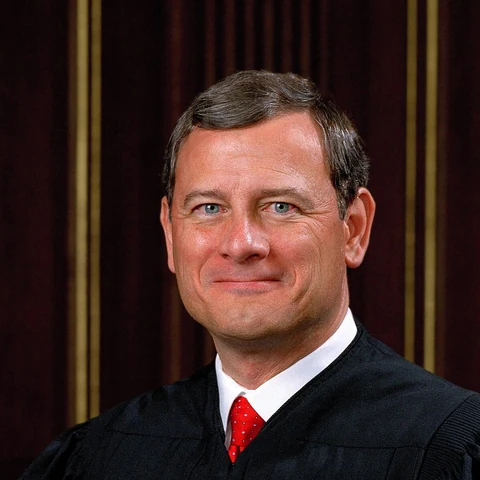 John G. Roberts, Jr.Chief JusticeAppointed by GOP presidentGeorge W. Bush · 2005
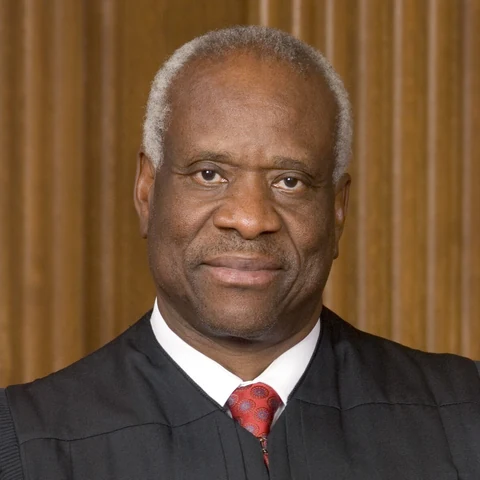 Clarence ThomasAssociate JusticeAppointed by GOP presidentGeorge H. W. Bush · 1991
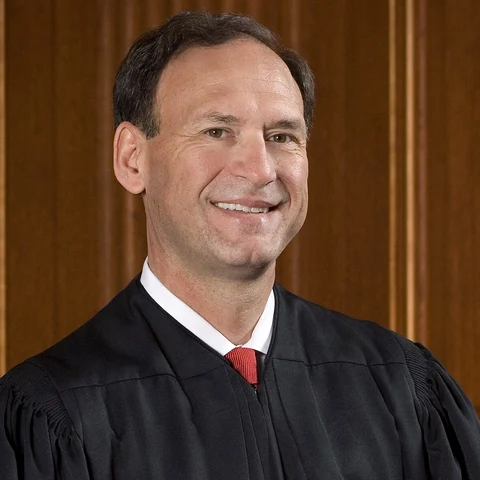 Samuel A. Alito, Jr.Associate JusticeAppointed by GOP presidentGeorge W. Bush · 2006
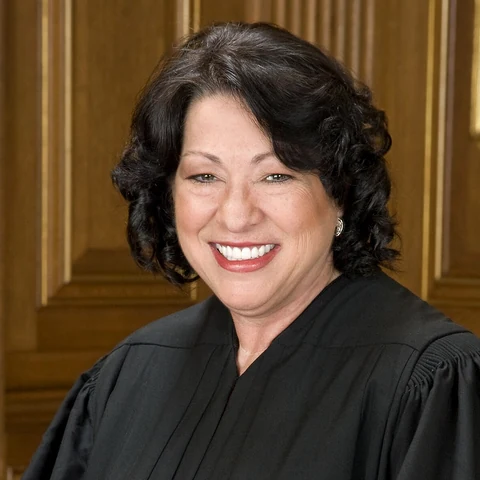 Sonia SotomayorAssociate JusticeAppointed by DEM presidentBarack Obama · 2009
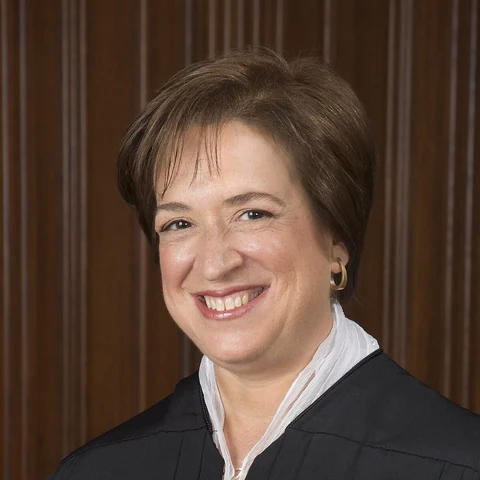 Elena KaganAssociate JusticeAppointed by DEM presidentBarack Obama · 2010
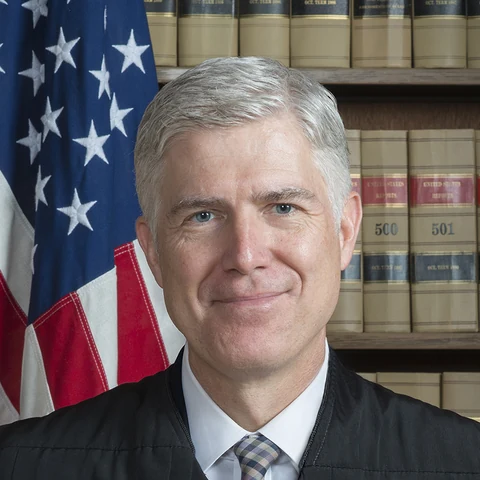 Neil M. GorsuchAssociate JusticeAppointed by GOP presidentDonald Trump · 2017
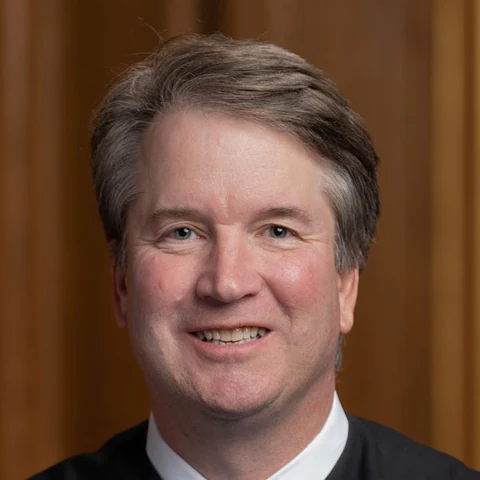 Brett M. KavanaughAssociate JusticeAppointed by GOP presidentDonald Trump · 2018
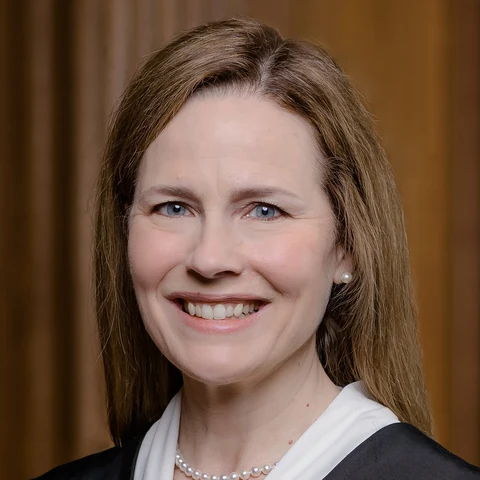 Amy Coney BarrettAssociate JusticeAppointed by GOP presidentDonald Trump · 2020
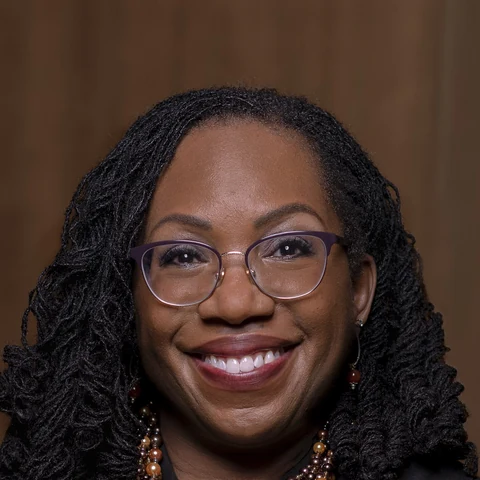 Ketanji Brown JacksonAssociate JusticeAppointed by DEM presidentJoe Biden · 2022
- Proposed seatsNo nominees. Not law.
Portrait credits and licenses
- John G. Roberts, Jr. · photographed 2005 · Steve Petteway · Public domain (as labelled on Wikimedia Commons; official Supreme Court portrait) · Wikimedia Commons ↗
- Clarence Thomas · photographed 2007 · Steve Petteway, Collection of the Supreme Court of the United States · Public domain (as labelled on Wikimedia Commons; official Supreme Court portrait) · Wikimedia Commons ↗
- Samuel A. Alito, Jr. · photographed 2007 · Collection of the Supreme Court of the United States, Photographer: Steve Petteway · Public domain (as labelled on Wikimedia Commons; official Supreme Court portrait) · Wikimedia Commons ↗
- Sonia Sotomayor · photographed 2009 · Collection of the Supreme Court of the United States, Steve Petteway source · Public domain (as labelled on Wikimedia Commons; official Supreme Court portrait) · Wikimedia Commons ↗
- Elena Kagan · photographed 2013 · Steve Petteway, Collection of the Supreme Court of the United States · CC BY-SA 3.0 · Wikimedia Commons ↗ · CC BY-SA 3.0 ↗
- Neil M. Gorsuch · photographed 2017 · Franz Jantzen, Collection of the Supreme Court of the United States · Public domain (as labelled on Wikimedia Commons; official Supreme Court portrait) · Wikimedia Commons ↗
- Brett M. Kavanaugh · photographed 2018 · Photographer, Fred Schilling Taken for Supreme Court · Public domain (as labelled on Wikimedia Commons; official Supreme Court portrait) · Wikimedia Commons ↗
- Amy Coney Barrett · photographed 2021 · Fred Schilling · Public domain (as labelled on Wikimedia Commons; official Supreme Court portrait) · Wikimedia Commons ↗
- Ketanji Brown Jackson · photographed 2022 · Fred Schilling / United States Supreme Court · Public domain (as labelled on Wikimedia Commons; official Supreme Court portrait) · Wikimedia Commons ↗
THE HISTORICAL RECORD
Circuits, seats and the Constitution.
Supporters connect thirteen seats to thirteen federal courts of appeals. That argument needs a clear distinction between appellate circuits and district courts, and between statutory history and constitutional requirements.
The federal system has 94 district courts, 12 regional appellate circuits and a specialized nationwide Federal Circuit: thirteen courts of appeals.
Court size sometimes followed circuit organization in the nineteenth century. The nine-seat arrangement in 1869 corresponded to nine circuits at that time.
The Constitution does not fix the number of justices or establish a permanent one-justice-per-circuit formula. Today a justice may handle matters from more than one circuit.
ARCHIVAL LEGISLATION · 118TH CONGRESS
Judiciary Act of 2023 · archival proposal
The introduced 118th-Congress bills proposed one Chief Justice and twelve associate justices. These records do not establish a currently pending 119th-Congress bill.
U.S. Government Publishing Office ↗ · U.S. Government Publishing Office ↗
WHAT VOTERS WERE ASKED
Read each question on its own.
General-expansion polls and thirteen-seat questions remain separate. No pooled average or comparable trend is calculated. Sample, population, framing and unsure options remain attached.
The source-bound polling catalog is loading.
THE POSITION RECORD
Statements and actions.
Five selected records: two candidate debate answers, two legislative votes and one historical officeholder statement. This is not a review of every candidate.
Unknown or unreviewed positions remain unverified. Opposition to a nine-seat cap alone does not establish support for thirteen seats. For candidates without a reviewed source: Position not yet verified.
ORIGINAL READING
Understand the arguments.
Official analysis and advocacy are distinct kinds of evidence. Policy judgments remain attributed to their authors.
THE SOURCE CATALOG
Keep the record attached.
Checking the reviewed catalog…