Analysis
Voters express more confidence in ballot access than protection from hacking
Pew’s registered-voter confidence estimates were 80% for ballot access, 68% for noncitizen voting checks and 52% for protection from hacking.
Evidence as of
Registered voters expressed more confidence in ballot access than in election-system security in Pew Research Center’s survey. Pew’s published weighted estimates were 80% very or somewhat confident that all legally qualified voters could cast ballots if they wanted to, and 52% confident that U.S. election systems were secure from hacking and other technological threats. That is a 28-percentage-point gap between questions, not a change over time. Sources: Pew registered-voter confidence: ballot access and noncitizen voting checks, Pew registered-voter confidence: hacking and technological threats, Pew election-confidence topline: question wording and randomized form routing


A separate item found 68% confident that noncitizens who tried to cast ballots would be stopped, 16 points above the hacking-confidence figure. These answers describe voters’ confidence in different parts of the election process; they do not establish whether systems are secure or how often an ineligible ballot is cast. Sources: Pew registered-voter confidence: ballot access and noncitizen voting checks, Pew registered-voter confidence: hacking and technological threats
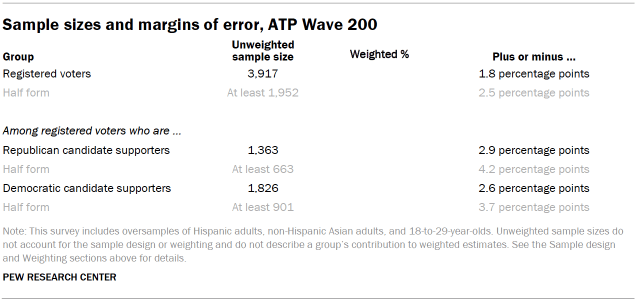
Pew surveyed 5,062 U.S. adults from September 28 to October 4, including 3,917 registered voters, and published the report on October 20. The ballot-access item went to a randomized half-form; the other two items went to all respondents. Pew reports margins of sampling error of ±2.5 points for registered-voter half-forms and ±1.8 points for the full registered-voter sample. Those are not margins of error for the cross-question gaps. Research: Hannah Hartig and Ted Van Green, Pew Research Center. Analysis: 21CEE. Sources: Pew registered-voter confidence: ballot access and noncitizen voting checks, Pew registered-voter confidence: hacking and technological threats, Pew election-confidence topline: question wording and randomized form routing, Pew election-confidence methodology: sample sizes and sampling error
Explore the data: Analysis and original-source references
Descriptive gaps between Pew’s weighted registered-voter estimates; question samples vary.
| Question compared with hacking confidence | Hacking confidence | Other confidence | Gap |
|---|---|---|---|
| Eligible voters can cast ballots | 52% | 80% | +28 percentage points |
| Noncitizens trying to vote would be stopped | 52% | 68% | +16 percentage points |
Sources: Pew registered-voter confidence: ballot access and noncitizen voting checks, Pew registered-voter confidence: hacking and technological threats, Pew election-confidence topline: question wording and randomized form routing, Pew election-confidence methodology: sample sizes and sampling error
Sources and contributors
Data: Pew Research Center. Report authors: Hannah Hartig and Ted Van Green. Analysis and graphic: 21CEE. Sources: Pew registered-voter confidence: ballot access and noncitizen voting checks, Pew registered-voter confidence: hacking and technological threats, Pew election-confidence topline: question wording and randomized form routing, Pew election-confidence methodology: sample sizes and sampling error
Explore the data: Read Pew’s original report and methodology
Sources & data
- Pew registered-voter confidence: ballot access and noncitizen voting checks · Pew Research Center · Hannah Hartig and Ted Van Green · (publication time unavailable)
- Pew registered-voter confidence: hacking and technological threats · Pew Research Center · Hannah Hartig and Ted Van Green · (publication time unavailable)
- Pew election-confidence topline: question wording and randomized form routing · Pew Research Center · (publication time unavailable)
- Pew election-confidence methodology: sample sizes and sampling error · Pew Research Center · (publication time unavailable)
Credits
Analysis: 21CEE editorial analysis (organization).
Corrections & updates
No corrections recorded.