Democrats reach 249 House calls. The vote margin is a different number.
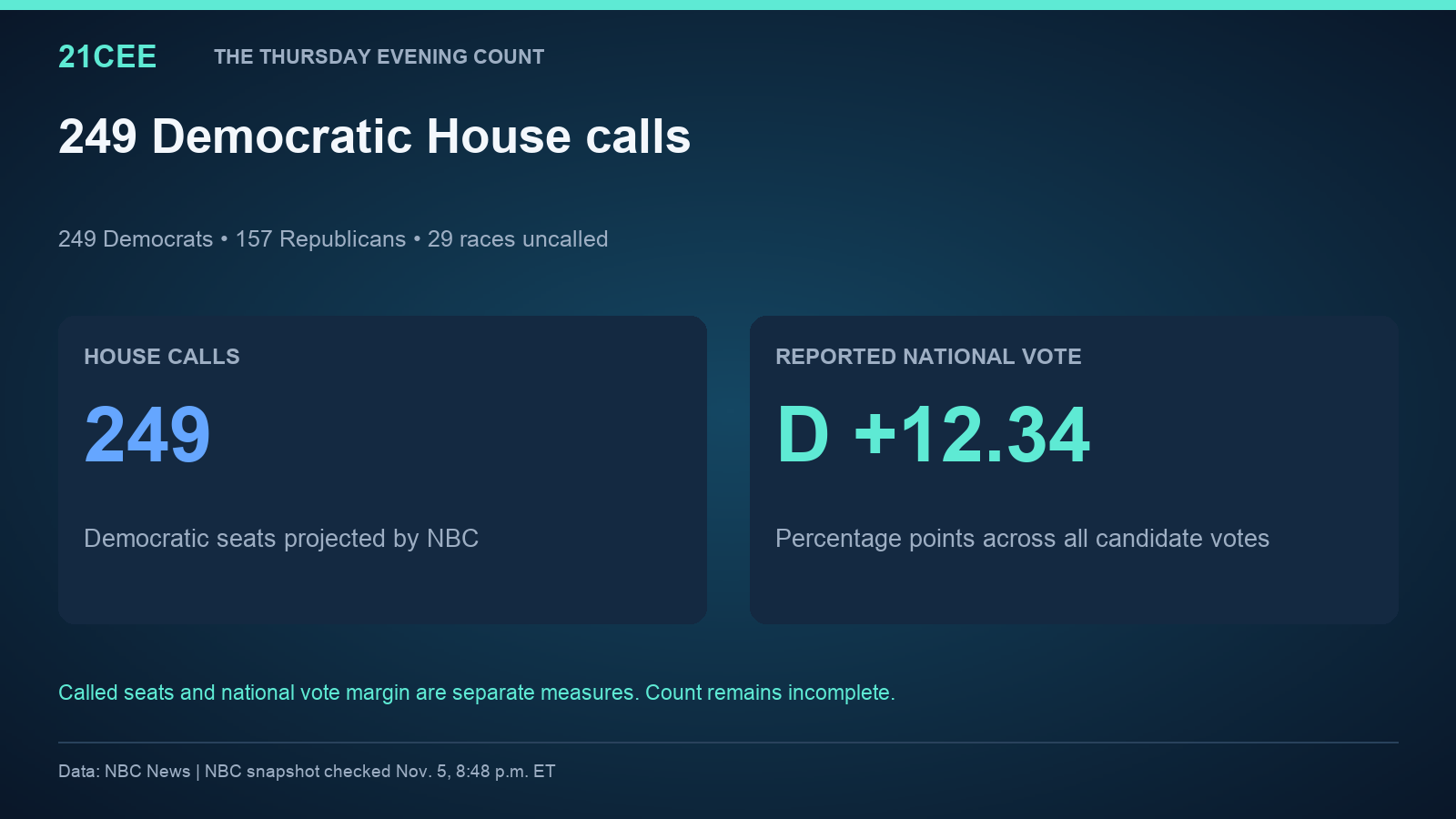
NBC’s Thursday evening snapshot has 249 Democratic House calls and a 12.34-point Democratic lead in the reported national vote. Those measure different things.
The House count is one seat short of 250
NBC News had projected 249 Democratic House wins and 157 Republican wins in the snapshot checked November 5 at 8:48 p.m. Eastern. Another 29 districts remained uncalled. Democrats were one additional call away from 250 seats, conditional on the existing projections holding. The count had not reached 250.
The same snapshot contains 111,737,447 reported votes across all 435 voting districts. Democratic candidates had 61,949,783 votes and Republican candidates 48,158,319. Subtracting the Republican total from the Democratic total and dividing by every reported candidate vote gives a Democratic lead of 12.34 percentage points.
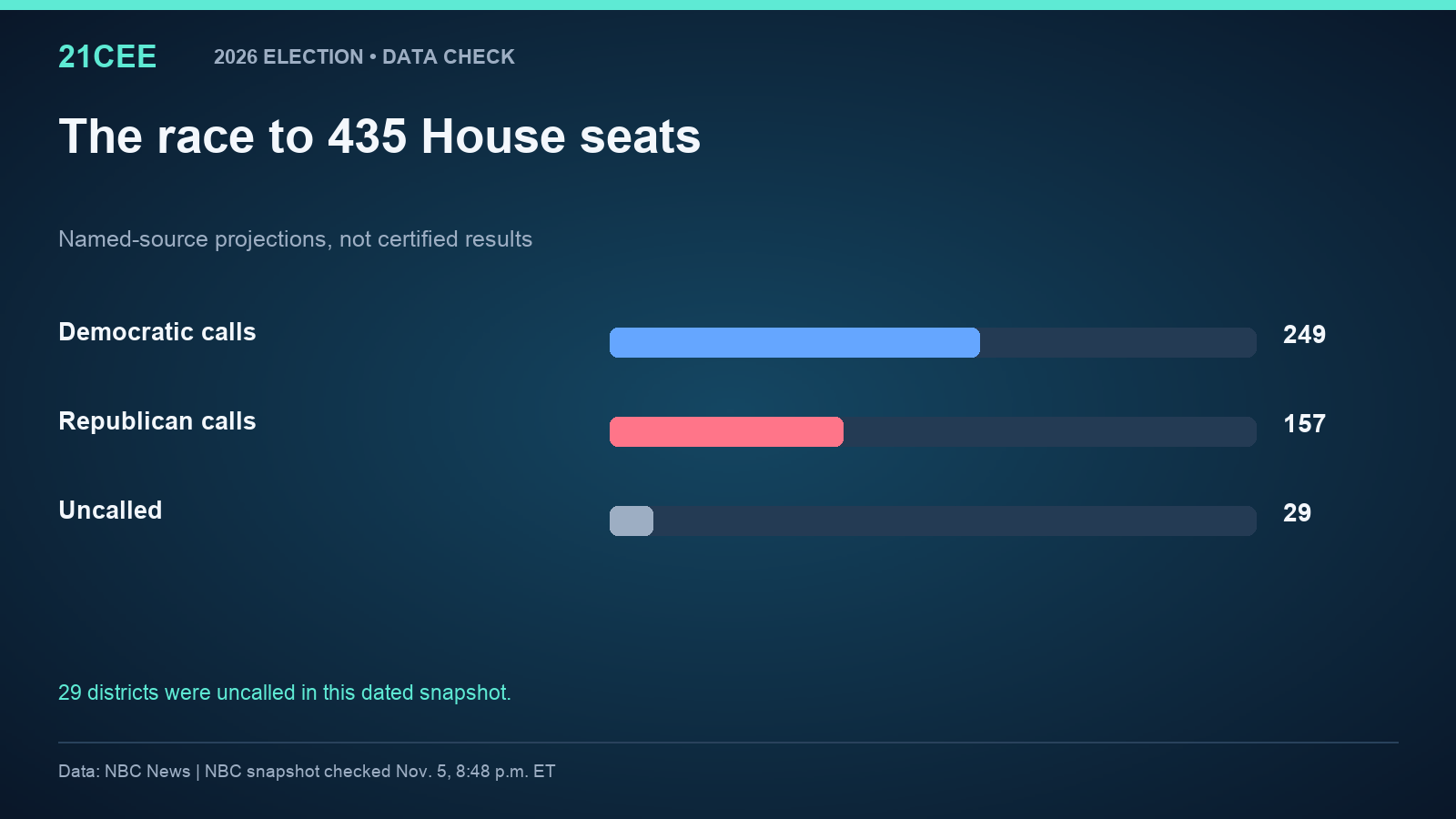
| Measure | Value |
|---|---|
| Democratic calls | 249 |
| Republican calls | 157 |
| Uncalled | 29 |
| Democratic votes | 61,949,783 |
| Republican votes | 48,158,319 |
| All candidate votes | 111,737,447 |
| D minus R / all reported votes | 12.342741 percentage points |
What a 13-point claim would need
That national vote margin is close to 13 points, but it is not the average margin in a Democratic victory. A national vote margin weights each reported vote equally. An average winning district margin gives each selected district equal weight and leaves out losses. Unopposed races and same-party contests also affect which comparison is meaningful.
Counting seats adds a third measure. Winning a district by one vote or a landslide produces the same one seat. None of these numbers should be substituted for another when checking a claim about the size of the election result.
The pre-election polling comparison
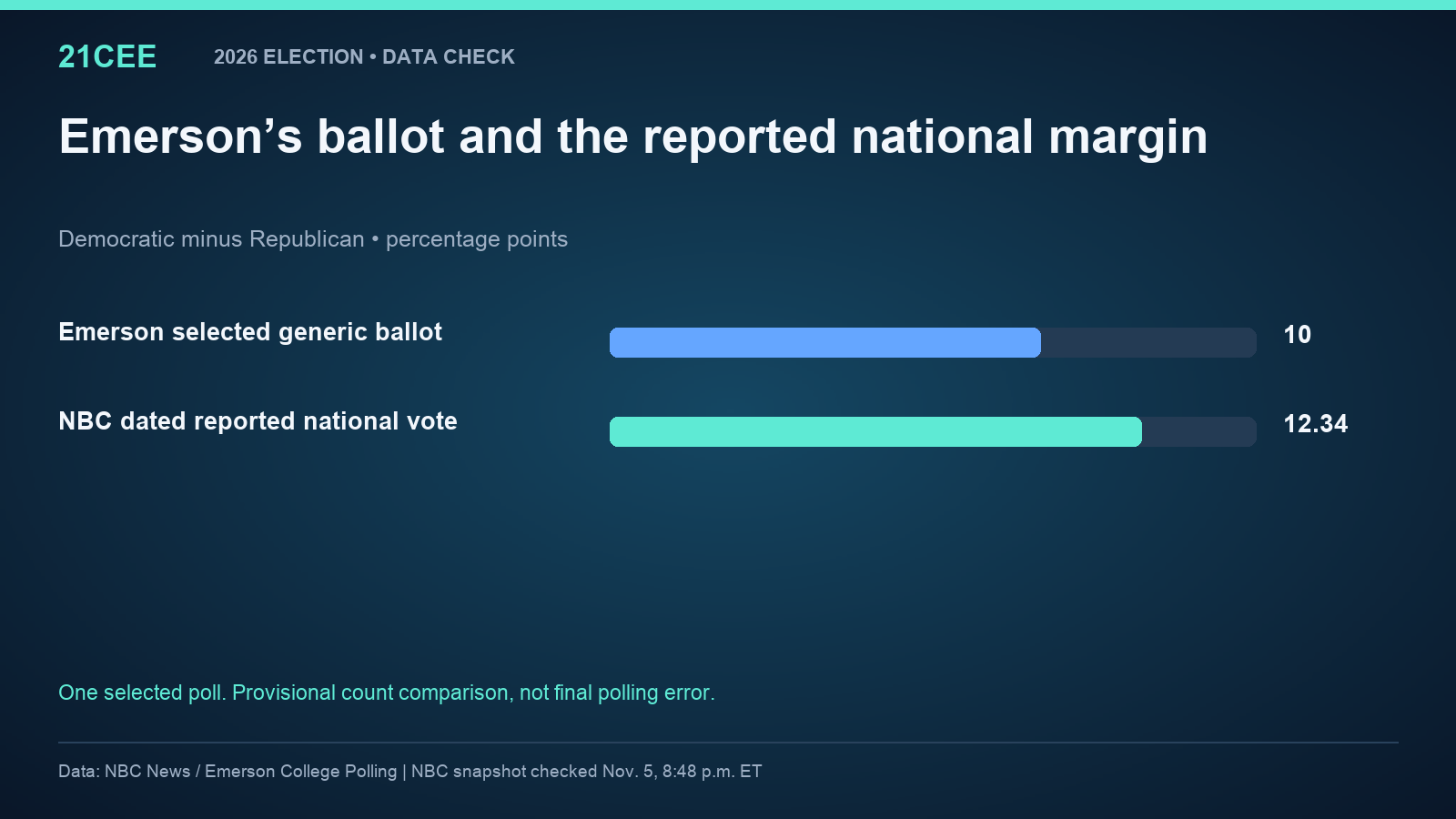
Emerson’s selected October 30 release put a Democratic House candidate at 52% and a Republican candidate at 42%, a ten-point generic-ballot lead. Fieldwork ran October 24–26 among 1,000 likely voters; the publisher reported a ±3-point credibility interval. Its displayed categories total 99%. We add no invented residual category.
The dated reported national margin is 2.34 points more Democratic than that survey’s published margin. This is a provisional comparison with one selected poll, not an average error for all pollsters. Uneven count completion, uncontested districts and differences between the survey electorate and actual House ballots still matter.
| Response | Published share |
|---|---|
| Democratic House candidate | 52 |
| Republican House candidate | 42 |
| Undecided | 5 |
The Senate figure needs its own label
NBC’s Senate display remains 54 Democratic-aligned seats and 44 Republican seats, with two unresolved. That balance includes seats not on the ballot and groups the independent holdovers with the Democratic side. It should not be described as 54 newly elected Democrats or 54 party Democrats.
These totals establish neither the final House margin nor a precise split between persuasion and turnout. For that, we need completed returns plus comparable voter-level evidence. A survey of people who voted can describe their choices; by itself it cannot tell us the participation rate of the people who stayed home.
Sources and calculations
Reporting: the linked original publishers. Calculations and graphics: 21CEE. Poll shares are kept as published; result margins use the exact candidate counts in the accessible table. The source clocks above describe the retained snapshot. No certification or original call time is inferred.